News
23 Sep 2026
SPARC and Télécom Paris organise an indoor-vs-outdoor workshop at COSIT 2026
At COSIT 2026 in York, the team of the In-n-Out Project organised the thematic workshop session titled “Indoor-vs-Outdoor Spatial Information: Similarities and Differences in Cognition and Computation”. About 40 conference participants first reflected on route instructions that cross indoor-outdoor thresholds, and then generalised this beyond navigation contexts.
The session was organised by Jakub and Jungwon from SPARC, together with Marina Smirnova and Panos Mavros from Télécom Paris.
10 Sep 2026
Would the gallery guards understand their gallery? New paper at COSIT 2026
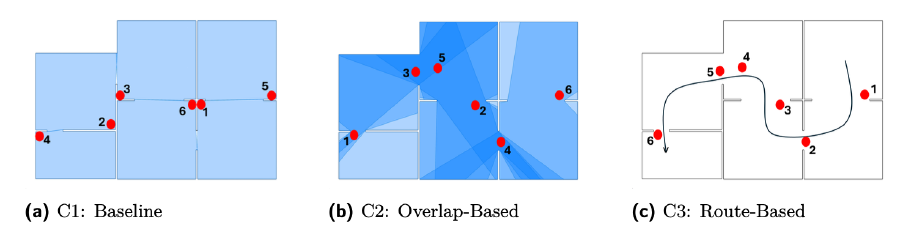
Our paper “Understanding Building Layouts from Minimal 360° Views: Effects of Viewpoint Overlap, Sequencing, and Landmarks” by Ahmed Aly and Jakub Krukar is out in the proceedings of COSIT 2026 (LIPIcs, open access).
The Art Gallery Problem gives the fewest viewpoints needed to see every part of a building. We asked whether those hypothetical guards would actually understand their gallery’s layout.
Fifty participants explored five buildings through minimal panoramic views and then picked the correct floor plan from similar alternatives. Visual overlap between consecutive views was not enough on its own. This study lets us simulate what are critical views inside a building that allow their visitors to understand the layout.
The study is part of the What does it take to learn a building? project, funded by JICE seed funding. The web-based experimental pipeline is open source on GitHub and the raw data are on OSF.
28 Aug 2026
Paper at Spatial Cognition 2026 in Glasgow
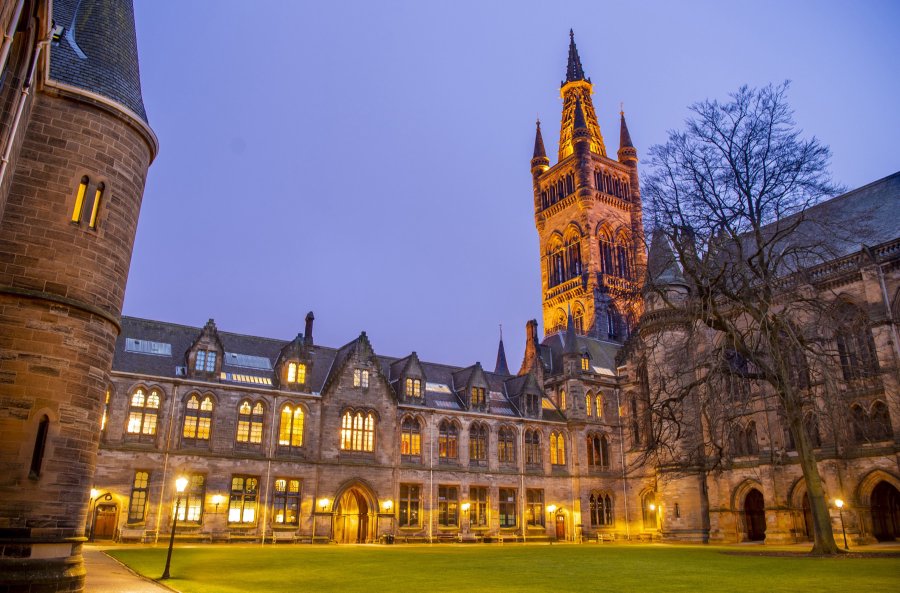
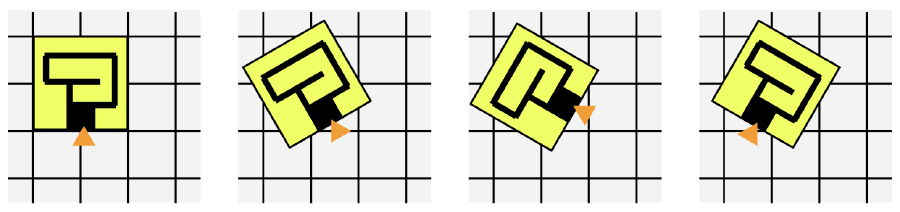
Jakub presented the paper “How Floor Rotation Fragments 3D Cognitive Maps” at Spatial Cognition 2026, hosted by the Turner Kirk Centre for Spatial Reasoning at the University of Glasgow, 25–28 August 2026.
The paper is based on the MSc thesis by Amirtha Varshini Raja — great work, Amirtha! The study is part of the 3D Sketch Maps project, and was conducted together with Tianyi Xiao and Martin Raubal (ETH Zürich) and Angela Schwering.
Using VR navigation and 3D sketch mapping, we found that rotating the floors of a multilevel building leaves within-floor memory almost untouched. However, it reduces the odds of correctly recalling relations across floors. People rely on separate floor-wise representations instead of a unified 3D cognitive map.
22 Aug 2026
SPARC at the NEAR Frontiers 2026 Workshop in Istanbul
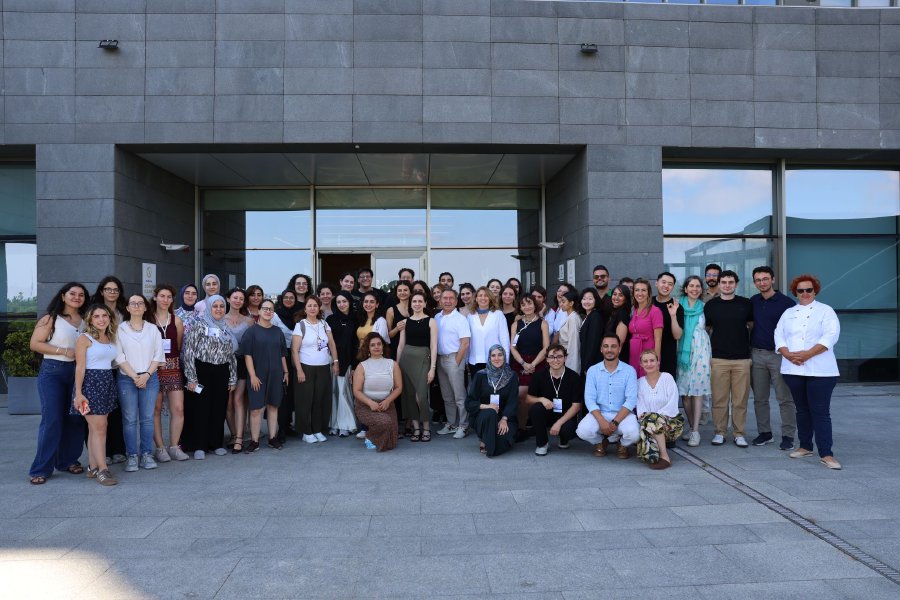
Two PhD students from SPARC, Jung-Won and Fengxu, took part in the NEAR Frontiers 2026 Workshop in Istanbul, held 30 July to 21 August 2026. The symposium and workshop were built around the central topic of neuroarchitecture, exploring how insights from neuroscience and cognitive science can inform the design and understanding of built environments.
The three-week intensive program translated interdisciplinary research questions into hands-on experimental studies, working through research design, EEG and VR-based data collection, preprocessing, and statistical analysis. Great experience connecting with researchers working at the intersection of architecture, neuroscience, and cognitive science!
01 Jul 2026
Ahmed Aly joins SPARC, SPACE-EYE project begins

Ahmed Aly has joined SPARC as a PhD candidate to work on the SPACE-EYE project — Spatial and Architectural Evidence from Movement-aware Eye-tracking. Welcome Ahmed!
16 Jun 2026
New publication — 3D environments require 3D visualisations
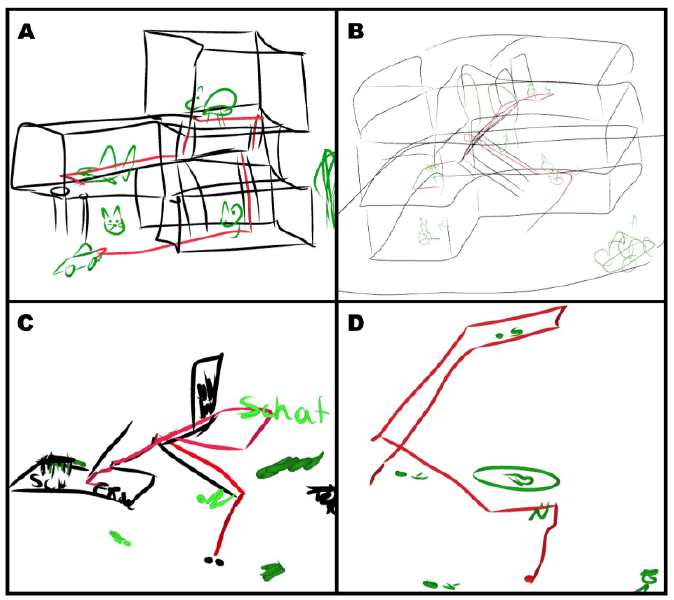
Our new paper is out in the International Journal of Geographical Information Science: 3D environments require 3D visualisations: the limitations of 2D sketch maps in capturing spatial knowledge
An interactive landing page with all data and a summary of results is available here.
What we found: Participants navigated two types of vertically-complex environments and drew both 2D (pen-and-paper) and 3D (VR) sketch maps. We coded the occurrence and correctness of qualitative spatial relations across all three dimensions.
Key results:
- When given 2D pen-and-paper, participants omitted a large amount of (mainly vertical) spatial information that they did in fact encode in memory.
- When given a 3D VR sketch mapping tool, they externalised more vertical relations while maintaining comparable correctness.
- The bottleneck is the 2D medium itself, not participants’ spatial knowledge. This has methodological implications for navigation research, architectural cognition, and GIS.
A big thank you to all collaborators. This paper is part of the 3D Sketch Maps project, funded by the Swiss National Science Foundation.
15 Apr 2026
New Paper Accepted at the 15th Space Syntax Symposium
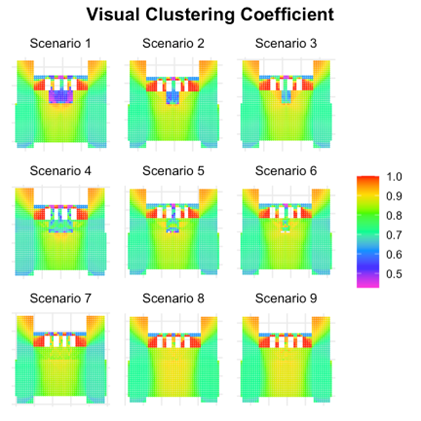
Our paper “A Spatial Signature for the In-Between: Characterising Indoor-Outdoor Transitional Interface Through Space Syntax Measures” has been accepted to the 15th Space Syntax Symposium (SSS), exploring the spatial logic of transitional interfaces through a unified VGA framework. Using a controlled parametric study, we demonstrate that the intermediate zone between interior and exterior environments exhibit a distinct syntactic signature that is differentiable from both indoor and outdoor spaces. The paper is co-authored by Jung-Won, Marina, Panos, and Jakub, as part of our DFG–ANR-funded project “In-and-Out: A Cognitively-Grounded Integration of Indoor and Outdoor Spatial Computing.” Jung-Won will be presenting this work at SSS 2026. Congrats!
01 Apr 2026
Maximilian Elfers joins SPARC

Having graduated from the University of Muenster in Germany, Maximilian Elfers joins SPARC as a PhD candidate. Welcome Maxi!
- ← Newer
- 1 of 4
- Older →